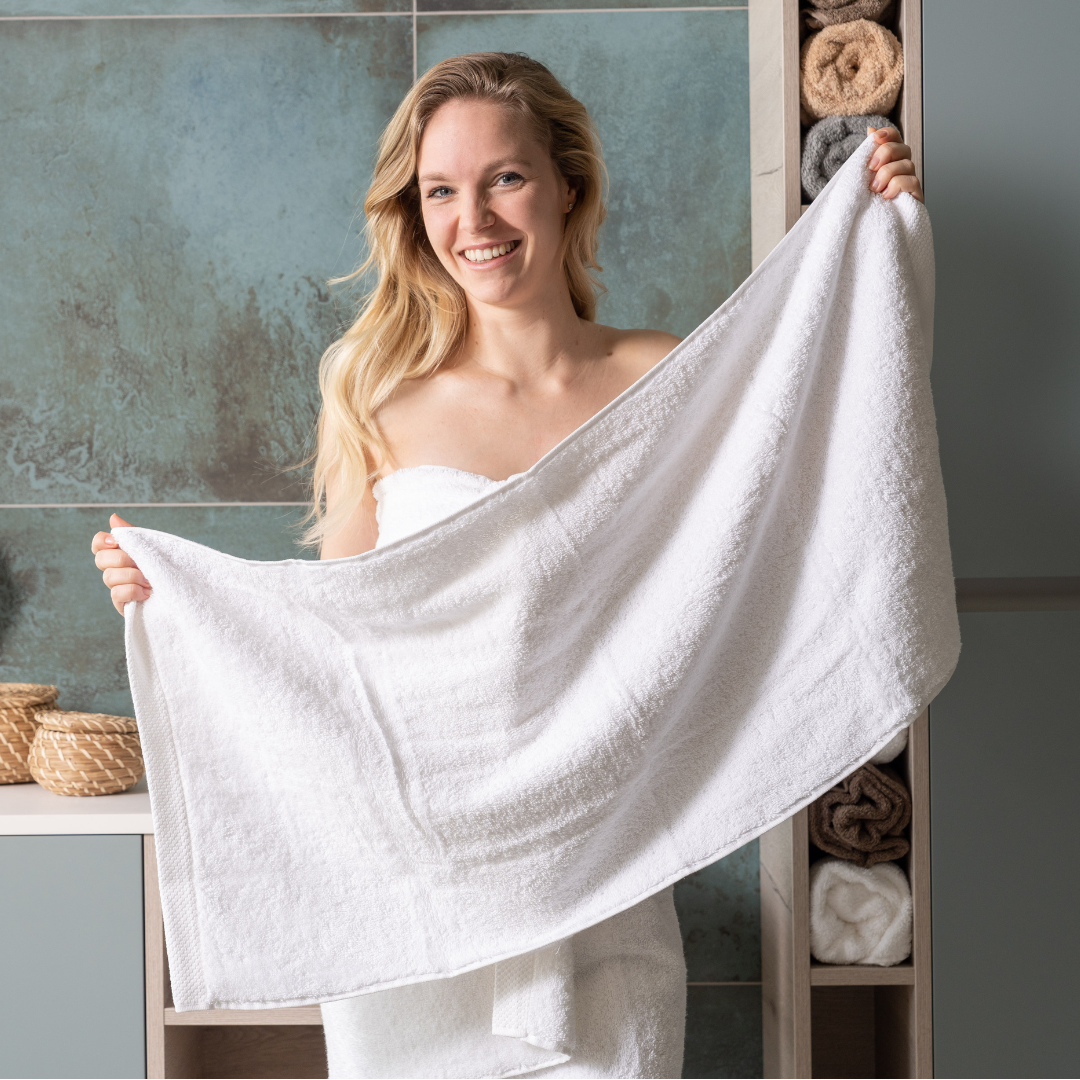
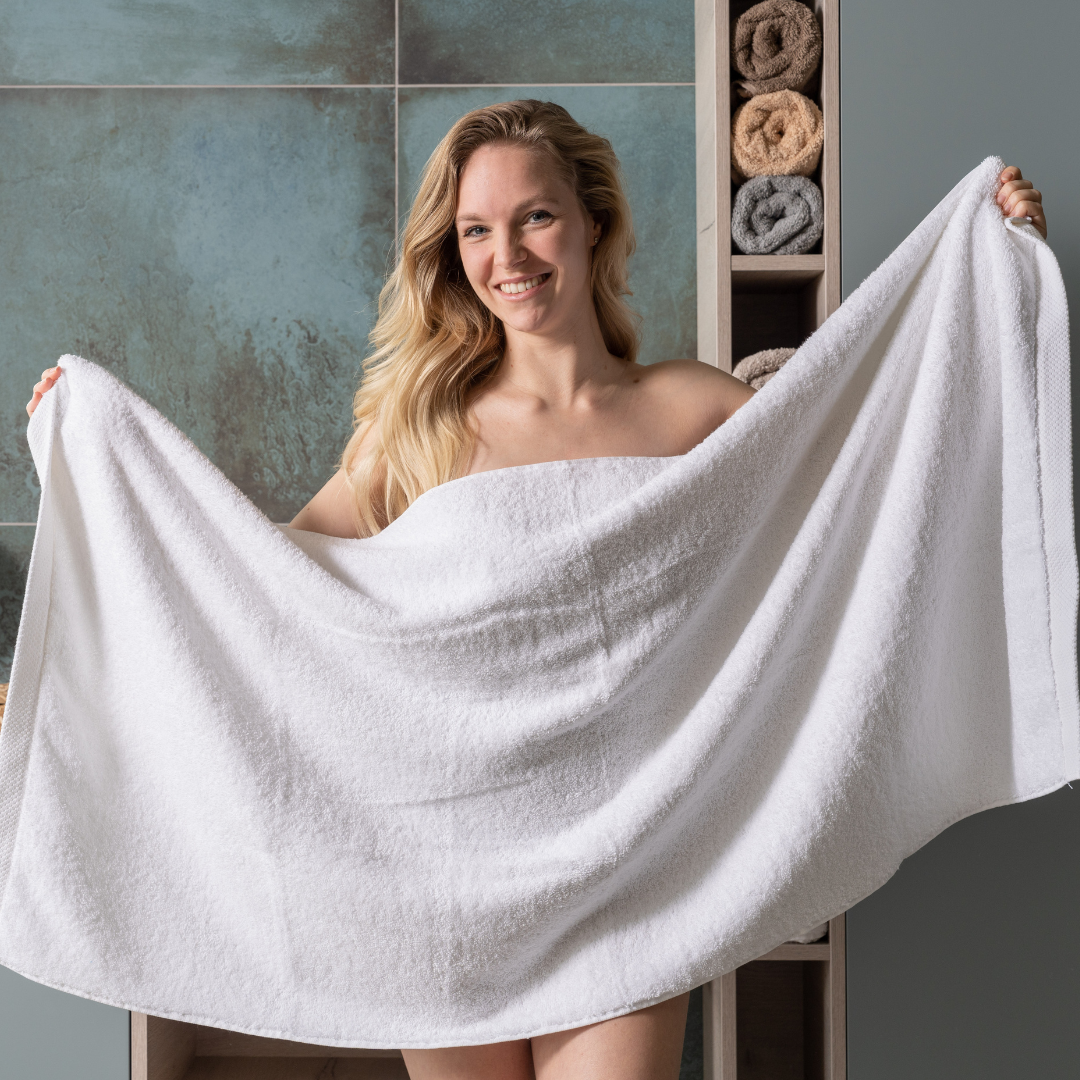
How old are your towels, actually? Three years? Five years? Perhaps some of them have been sitting in your bathroom cupboard for ten years already.
You use them every day, wash them regularly, and as long as they don't have any holes, everything seems perfectly fine. Yet a towel can be past its best without you noticing straight away.
Maybe it doesn't feel as soft anymore. Perhaps it takes longer to dry yourself. Or maybe you've simply become used to that rough towel after your shower.
But when is a towel really worn out? And how can you avoid buying new towels that disappoint you again after just a few months?
At Miss Towels, we don't believe in replacing towels unnecessarily. That's why we're showing you how to assess the condition of your current towels, which warning signs matter, and what to look for if you eventually decide it's time for something new.
How many years should a good towel last?
There's no fixed expiry date for towels.
One towel may last for many years, while another loses its softness, shape or strength much sooner.
These differences depend on several factors, including the quality of the cotton, the yarns, the weaving construction, and how you use and care for the towel.
How often you use it matters too. A towel that's used every day and washed several times a week experiences more wear than one you only use occasionally.
Our advice? Don't focus only on age. Pay attention to the actual condition of your towel.
A six-year-old towel might still perform perfectly well, while a two-year-old towel may already show clear signs of wear.
5 signs it's time to replace your towel
1. Your towel feels rough and scratchy
Do you remember how soft your towels felt when you first bought them?
That wonderful feeling of wrapping yourself in a thick, comfortable towel after a shower?
Over time, that can change. The fabric starts feeling stiffer, the terry loops become less flexible, and drying yourself is no longer quite as pleasant.
However, that doesn't automatically mean your towel is worn out.
A rough towel can also be caused by hard water, detergent residues or the way it's dried.
What can you do? Wash the towel according to its care label, use the correct amount of detergent and avoid fabric softener. Then check whether the towel feels more comfortable again.
If it remains rough despite proper care and the terry loops are noticeably worn down, replacing it may be a sensible choice.
2. Your towel absorbs less and less water
You step out of the shower, start drying yourself and notice that your skin still feels damp.
You have to rub the same areas several times before you finally feel dry.
That's not the comfortable experience you expect from a good towel.
Reduced absorbency can result from fabric softener or detergent residues. However, wear and the towel's original construction can also play a part.
What can you do? First, try a few washes without fabric softener and carefully measure the amount of detergent you use.
If that doesn't help, your towel may no longer meet your expectations.
We've also written a separate blog explaining why some towels barely absorb water and how you can improve their absorbency.
3. The fabric is becoming thinner or the seams are coming apart
This is one of the clearest signs of wear.
Take a good look at your towel in natural daylight.
Can you see areas where the fabric has become noticeably thinner? Have many of the terry loops disappeared? Or are the side seams and hems beginning to come apart?
Every wash and every use creates some friction. Over time, this can affect the fibres, loops and finishing.
A single pulled loop doesn't mean you need to throw your towel away immediately. It's better not to pull the loop any further out of the fabric.
However, when large areas of the terry structure have disappeared or the seams are repeatedly coming undone, the towel is clearly showing signs of deterioration.
Our tip: When shopping for new towels, don't just pay attention to how soft they feel. Look closely at the quality of the side seams and hems too.
4. That musty smell keeps coming back
A towel should smell clean and fresh after washing.
Yet sometimes a towel develops a musty smell again after you use it, even though it was only recently washed.
This can happen when the towel doesn't dry properly, residues remain in the fabric or the washing machine itself isn't clean.
So it doesn't automatically mean that the towel is worn out.
First, check your washing routine, bathroom ventilation and how you store your towels.
If the smell keeps returning despite thorough cleaning and complete drying, replacing the towel may eventually be the most practical solution.
5. Your towel simply doesn't feel nice anymore
Not every reason for replacing a towel has to be technical.
Perhaps your towel is still intact. Maybe it even dries your skin reasonably well.
But it feels thin, looks tired and no longer gives you that lovely feeling you once enjoyed.
That's a perfectly valid reason to make a change too.
You probably use your towel every single day. Why shouldn't that everyday moment feel comfortable?
At Miss Towels, it's not just about drying yourself. It's about that little moment for yourself after a warm shower.
That wonderful luxury hotel feeling, right in your own bathroom.
The towel checklist: replace it or keep it?
Not sure whether your towels need replacing? Take one out of the cupboard and check the following:
- Softness: Does the towel still feel comfortable, or has it become permanently rough?
- Absorbency: Does it absorb moisture effectively, or does your skin stay damp for a long time after drying?
- Terry fabric: Are the loops still full and fluffy, or can you see lots of bare and thinning areas?
- Finishing: Are the seams and hems still strong and secure?
- Freshness: Does the towel smell clean after being washed and dried thoroughly?
If your towel passes all these checks, there's probably no urgent reason to replace it.
Noticed just one issue? Try improving your care routine first.
If several qualities have clearly deteriorated, it might be time for a new set.
Why do some towels stay beautiful for longer than others?
If you decide to buy new towels, you naturally don't want to face the same decision again in just a few months.
That's why it's worth looking beyond colour, price and how soft the fabric feels straight out of the packaging.
Several technical characteristics can influence how a towel performs during everyday use.
The quality of the cotton fibres
Cotton is a natural material that's particularly well suited to terry towels.
However, not every cotton towel is the same.
Factors such as fibre length, yarn quality and manufacturing techniques can influence how consistent, strong and comfortable the fabric feels.
With combed cotton, some of the shorter fibres are removed during production. This can contribute to a more uniform yarn structure.
However, a label saying "100% cotton" or "combed cotton" isn't a guarantee on its own that a towel will stay beautiful for years.
The construction of the terry fabric
A terry towel consists of a woven base with raised loops.
These loops create that characteristic full, plush feeling and play an important role in absorbing moisture.
How the loops are constructed and how the yarns are processed can affect softness, wear resistance and absorbency.
That's why two towels that look almost identical at first glance can perform very differently in everyday use.
The finishing of the edges
You might focus mainly on the soft terry fabric, but the finishing deserves attention too.
After all, a towel is regularly handled, hung up, washed and folded.
That's why it's worth checking how the side edges and hems have been stitched.
Neat, strong finishing is an important quality feature. However, the overall durability of a towel still depends on its complete construction and how it's used.
The weight: is heavier always better?
You may have come across towels weighing 400, 550, 650 or even 800 GSM.
GSM stands for grams per square metre. It tells you how much the towel fabric weighs.
A higher weight can create a fuller, heavier feel, but it doesn't automatically tell you everything about softness, absorbency or lifespan.
An especially heavy towel may also take longer to dry completely.
Ultimately, it's about the combination of material, yarn, weaving structure, finishing and the level of comfort you personally prefer.
Why do we choose 550 GSM at Miss Towels?
At Miss Towels, we want to offer towels that don't just look beautiful but are a pleasure to use every day.
That's why our towels are made from 100% cotton with long, combed cotton fibres and have a weight of 550 GSM.
The side edges are double-stitched, and during development we've deliberately focused on both the feel and finishing of our towels.
We choose 550 GSM because we want to offer a comfortable balance between a full, soft feel and a towel that's easy to handle in everyday life.
That doesn't mean our towels will never wear out. No towel stays brand new forever.
However, we believe that good material choices, careful construction and the right washing routine together provide an important foundation for long-lasting enjoyment.
And ultimately, that's what you want: not having to think about buying new towels all the time, but simply enjoying a soft, comfortable moment after your shower.
How much does a good towel cost per use?
A high-quality towel may cost more initially than a basic alternative.
But looking at the purchase price alone doesn't tell the whole story.
Imagine buying a towel for €15 and using it an average of four times a week for five years.
That's approximately 1,040 uses.
The initial purchase price would work out to around one and a half cents per use.
Of course, this is only an example. How long a towel actually lasts depends on the product and household. Washing and drying also involve additional costs.
Still, it shows why it's worth looking beyond the lowest price and considering the comfort and quality you receive in return.
You don't use a towel just once. You use it hundreds of times.
That's why it's worth being selective about what you buy.
How to keep your towels looking beautiful for longer
Whether you use Miss Towels or another brand, proper care can help your towels stay comfortable for longer.
- Follow the care label. Choose a suitable washing temperature and programme.
- Don't use too much detergent. Adjust the dosage to your water hardness, laundry load and level of dirt.
- Be careful with fabric softener. Some products can affect absorbency.
- Don't overload the washing machine. This gives your towels enough room to move and rinse thoroughly.
- Allow towels to dry completely. Hang them up fully after use and ensure there's enough ventilation.
- Avoid unnecessary friction. Try not to wash towels with clothing that has sharp zips or other details that could damage the terry loops.
You don't need to turn washing towels into a complicated routine. A few sensible habits can already make a difference.
Conclusion: replace your towels based on quality, not age
A towel doesn't need replacing simply because it's three, five or even ten years old.
As long as it stays clean, absorbs moisture well, feels comfortable and doesn't show serious signs of wear, you can happily continue using it.
But have you noticed that your towels have become thin, rough or uncomfortable? Or have you spent years drying yourself with towels that simply don't feel good anymore?
Then perhaps it's time to treat yourself to something better.
Because a lovely towel isn't something you use once and forget about.
It's something you get to enjoy every morning and evening, again and again.
Ready for a new set? Discover the 550 GSM hotel-quality towels from Miss Towels and bring that wonderful luxury hotel feeling into your own bathroom.
Frequently asked questions about towel lifespan
Should you replace towels after two years?
No. There's no universal rule saying towels need to be replaced after two years. Their condition, frequency of use and care routine are more important than their age.
Can towels last ten years?
Yes, that's possible. Some towels can remain usable for many years with proper care. However, regularly check their absorbency, softness, freshness and signs of wear.
Are expensive towels always better?
No. A higher price doesn't guarantee better quality. Also consider the materials, construction, finishing and experiences of other customers.
Do thicker towels last longer?
Not automatically. A higher GSM means more textile weight per square metre, but it doesn't tell you enough about durability on its own. The yarn, weaving structure and finishing also play important roles.
When should you throw away old towels?
If they're badly worn, barely absorb water or no longer smell fresh despite thorough washing and drying, replacement may be sensible. If they're simply a little rough, try adjusting your washing routine first.